
Key Takeaways
- Dry eye disease can feel gritty, itchy, burning, or just tired and heavy.
- Symptoms can differ from one person to the next.
- Screens, wind, smoke, dry indoor air, medications, and hormone changes can make symptoms worse.
- Allergies and eye strain can feel similar, so an eye exam helps sort it out.
- If symptoms keep coming back, an eye doctor can talk through care options with you.
The Dry Eye Experience
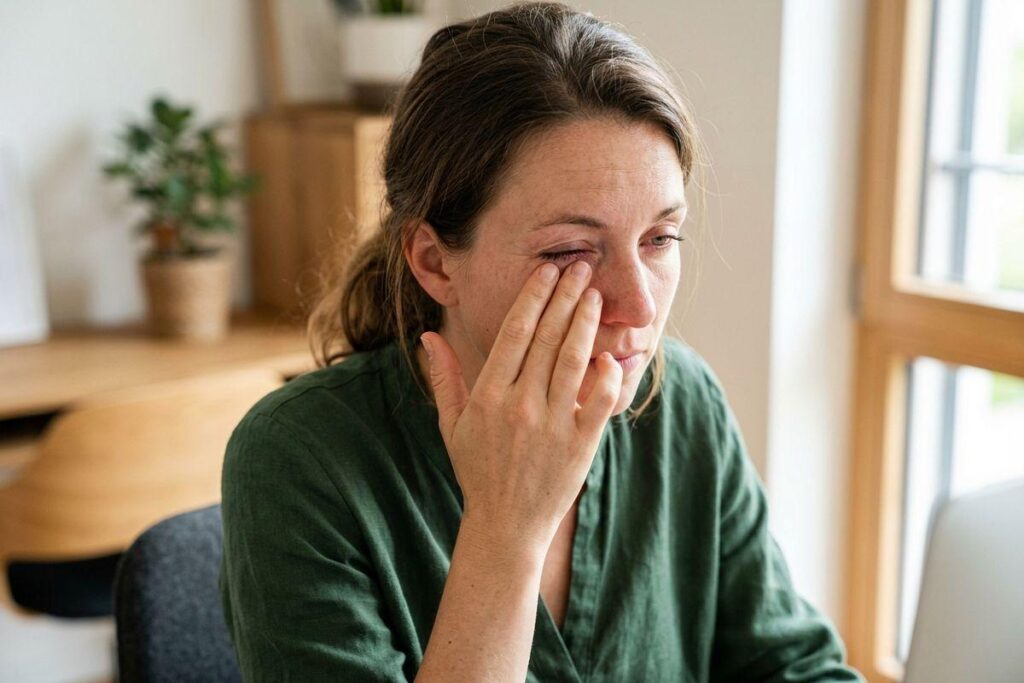
Dry eye disease often involves gritty, burning, and itching sensations, as well as blurry vision that comes and goes. It may also cause a heavy, tired feeling that gets worse as the day goes on. If these feelings sound familiar, a dry eye exam with our team at Pinnacle Eyecare is a good place to start.
What Is Dry Eye?
Dry eye disease happens when your eyes don’t produce enough tears or when your tears don’t lubricate your eyes effectively. The result is a range of uncomfortable symptoms that can make it hard to focus or even go about your day.
Dry eye is a common issue for adults and families alike, but symptoms vary a lot from person to person.
What Are the Common Dry Eye Symptoms?
Forms of Discomfort
Common signs of discomfort caused by dry eye include:
- A gritty or sandy feeling, like something is stuck in your eye
- Itching or burning that makes you want to rub
- Redness in your eyes that shows up by evening
Vision Changes You May See
Dry eye disease doesn’t only show up as discomfort. It can also affect how you see. Here are a few changes you may notice:
- Blurry vision that comes and goes, and which may clear up when you blink
- Light sensitivity that makes bright rooms or headlights feel harsh
- Eyes that feel tired after screens
Can Dry Eye Cause a Heavy Feeling of Pressure?
For some people, yes. You might notice tired, heavy eyes at the end of the day, as if your eyelids weigh a little more than they did this morning. This feeling can vary from day to day and from person to person. If you notice this kind of symptom, bring it up at your next eye exam.

What Gets Mistaken for Dry Eye?
Plenty of eye conditions have symptoms that resemble dry eye. For instance, allergies can bring itchy, red eyes, while eye strain from screens can leave you tired and a bit blurry.
An eye exam helps clear it up. Your eye doctor can assess your eyes and help you identify what’s going on.
What Makes Dry Eye Symptoms Worse?
The following can all contribute to symptoms:
- Prolonged screen time and less blinking while you focus
- Wind, smoke, and dry indoor air (like a heated room in a Columbus winter)
- Medications, hormone changes, and age
When Should You See an Eye Doctor in Columbus?
Will Dry Eye Go Away on Its Own?
Mild, short-term dryness can ease up after a long day outdoors or when you take a break from your screen. However, ongoing symptoms are different.
If your symptoms keep coming back, persist, or worsen, it’s time to book a visit with your optometrist.
What to Expect at Your Dry Eye Visit
At dry eye appointments, your eye doctor will talk with you about your symptoms and daily habits, then look at your tear film and examine your eyelids.
From there, they’ll talk you through care options. People in Gahanna and New Albany can find our office close to home on Morse Road, and Max the office dog might even say hello.
Book Your Visit with Pinnacle Eyecare
You don’t have to put up with gritty, tired eyes. Our team at Pinnacle Eyecare is ready to listen, explain things plainly, and help you find a plan that fits your life. Call our office or fill out the online form to schedule your appointment today.