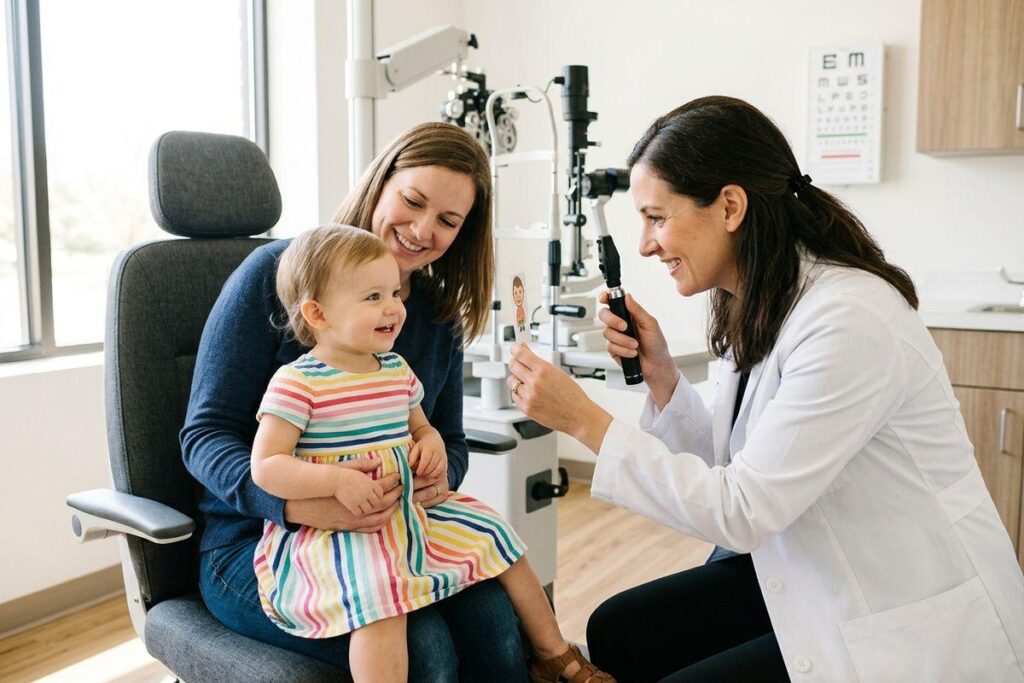
Your child learns about the world largely through their eyes, whether they’re sounding out words in a picture book or tracking a ball across the playground. Most kids assume everyone sees the way they do. So if letters on the page look fuzzy, they usually won’t say anything.
Your child needs a pediatric eye exam because vision plays a big part in how they learn and play, and an optometrist can find problems early, when they’re often easier to manage. A children’s eye exam checks how your child’s eyes focus and work together, and regular checkups can help you keep track of changes as they grow.
Why Eye Health Matters for Kids
Copying notes from the board and spotting a friend across the gym both depend on clear sight. When your child struggles to see, it can show up as frustration with homework or a lack of interest in sports.
Kids rarely have the words to describe a vision problem. Double vision or blurriness can feel normal to a child who’s never seen any other way, so an issue may go unnoticed for months.
Some conditions, like amblyopia (often called lazy eye), tend to respond better to treatment when an optometrist finds them at a young age. That’s one reason we like to see children well before they start school.
When to Schedule Your Child’s First Eye Exam
Plan your child’s first visit a little earlier than you might expect. Schedule it between 6 and 12 months of age, when your optometrist can check how your baby’s eyes move and focus together.
Book a second visit between ages 3 and 5. At this preschool stage, your optometrist can look for focusing or alignment issues before your child starts kindergarten.
Once school starts, bring your child in for a yearly exam. Kids’ eyes can change quickly during growth spurts. And reading gets more demanding with every grade, from picture books to chapter books to textbooks full of small print.
Eye Exam vs. Vision Screening: What’s the Difference?
A vision screening is a quick check that usually happens at school or during a visit to your pediatrician. It can flag some obvious issues, like trouble reading an eye chart from across the room.
Many screenings only test distance vision, though. A child who has trouble focusing up close may still pass, even if reading a book leaves them with tired eyes.
A comprehensive eye exam takes a much closer look. During the visit, your optometrist can check:
- Distance vision
- Near vision
- How well the eyes line up and work as a team
- The health of each eye, from the front surface to the retina at the back
If your child passes a screening at school but still struggles with reading, trust your instincts and book an exam anyway.
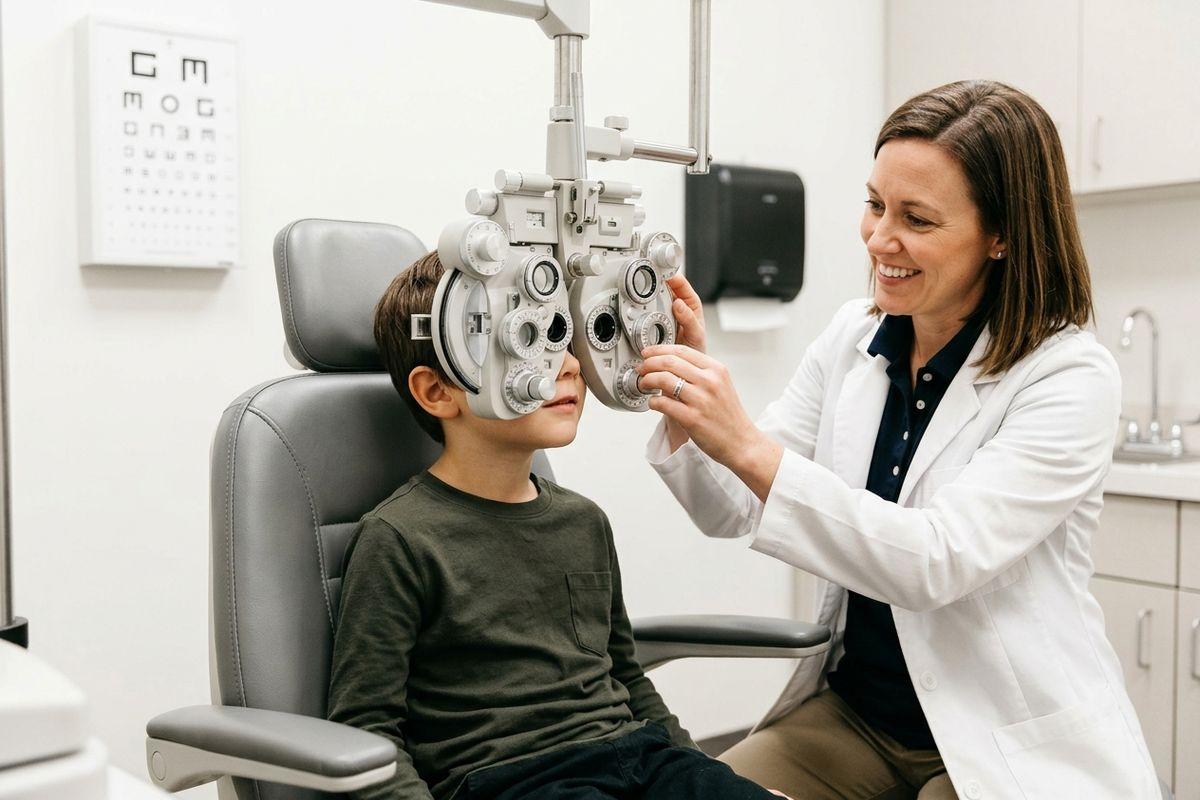
What Happens During a Pediatric Eye Exam
Most visits start with a conversation. Your optometrist will ask about your family’s eye history and anything you’ve noticed at home.
Share details about school and screen time as well. If your child rubs their eyes during homework or skips lines while reading, mention it, since small habits like these can point your optometrist in the right direction.
From there, the tests depend on your child’s age:
- Babies: Gentle checks of eye tracking and alignment, often with lights or colorful toys
- Preschoolers: Picture or symbol charts, along with simple depth perception tests
- School-age kids: Letter charts and focusing tests, plus dilating drops that widen the pupils so your optometrist can see the back of the eye
Signs Your Child Needs an Eye Exam
Some signs of a vision problem show up during everyday moments like homework or family movie night. Watch for a few of these:
- Squinting often
- Covering one eye
- Sitting very close to the TV
- Holding books close to their face
- Losing their place while reading
Headaches after school or a sudden dip in grades can also point to trouble with their eyes. If you notice any of these, book an exam soon, even if your child’s yearly visit is still months away.
Give Your Child a Clear View of the School Year
Your child’s eyes will keep changing as they grow, and regular exams can help you stay on top of those changes. At Pinnacle Eyecare, our optometrists work with kids of all ages, from babies at their first visit to teens heading into high school.
Book your child’s eye exam today. And if you have questions before the visit, give us a call. We’re happy to walk you through what to expect.