
Key Takeaways
- Simple daily habits like clean hands and nightly makeup removal help keep your eyes comfortable.
- Leafy greens, fish, and citrus give your eyes nutrients they use every day.
- UV 400 sunglasses and the 20-20-20 rule lower eye strain from sun and screens.
- Kids who play outside face a lower risk of nearsightedness.
- Regular exams catch changes early, so book a visit when symptoms show up.
How Small Habits Support Your Eyes
Your eyes work hard from the moment you wake up until you close them at night. Screens, dust, sunlight, and dry air all reduce your comfort during the day.
If you want to support your eye health, our team at Pinnacle Eyecare suggests that you adopt good daily habits, eat eye-friendly foods, take smart screen breaks, and schedule regular exams. None of these steps take much time, and together they help your eyes feel and work well for years to come.
Daily Habits That Support Healthy Eyes
Tiny choices add up. For example, touching your eyes with dirty fingers can expose your eyes to germs, so it’s important to wash your hands beforehand.
Leftover makeup can clog the tiny glands along your lash line and leave your eyes feeling gritty by morning. Take makeup off each night, then gently wash your eyelids with warm water to clear away oil and dust.
How to Care for Contact Lenses
Contacts sit right on your eye, so cleanliness is crucial. Daily disposable lenses skip the storage step and let you wear a fresh pair each morning.
If you use a case for your lenses, wash it weekly with soap and let it air dry.
Never sleep in lenses that aren’t made for extended wear, as doing so can trap bacteria and leave your eyes dry and red.
Foods That Boost Your Vision
Eating right supports your eye health. Leafy greens like spinach and kale contain pigments that help shield the back of your eye.
Fish such as salmon and tuna have omega-3 fats that support a smooth tear layer. Round things out with citrus fruits, sweet potatoes, and eggs for a steady mix of nutrients across the week.
Key Nutrients for Eye Health
- Vitamin A helps keep the surface of your eyes moist and comfortable.
- Vitamins C and E help protect eye cells from everyday wear.
- Zinc supports the retina, the part of your eye that turns light into the images you see.
How to Protect Your Eyes From Strain and Sun
UV exposure increases your risk of serious eye conditions later in life. Wear sunglasses rated UV 400 outdoors to block UV light and protect your eyes.
Reach for protective eyewear during sports or yard chores, since flying debris can strike fast.
Keep artificial tears nearby for those moments when your eyes feel dry and scratchy.

The 20-20-20 Rule for Screen Time
Staring at a screen makes you blink less, which leaves your eyes tired. The 20-20-20 rule gives your eyes a rest.
- Take a break every 20 minutes.
- Look at something about 20 feet away.
- Hold that gaze for 20 seconds before you return to your screen.
Things to Avoid for Better Eye Health
Some daily habits work against your eyes. In particular, smoking raises your risk of several vision problems.
Rubbing your eyes can cause irritation and spread germs, so use a gentle touch or a clean tissue instead.
Never look directly at the sun, even for a second, as doing so can permanently damage the back of your eyes.
Why Kids Need Outdoor Play
Time spent outside does more than burn energy. In fact, natural light lowers a child’s risk of becoming nearsighted.
- Outdoor time helps balance the close-up focus that screens demand.
- Mix screen sessions with active breaks throughout the day.
- Encourage kids to speak up about blur or headaches so any changes to their vision get caught early.
When to See an Eye Doctor in Columbus
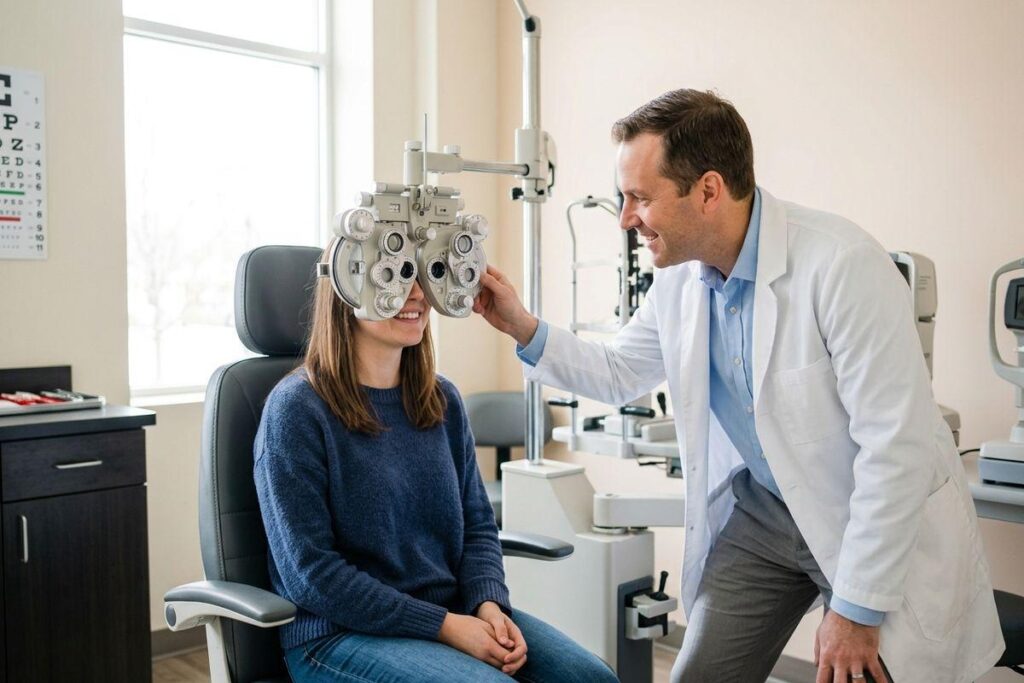
Regular checkups keep small issues from growing. A child should have a first full exam before age 5, while many adults benefit from a visit every 2 years.
After age 65, a yearly checkup helps the team watch for changes that come with time.
Signs You Should Schedule a Visit
Signs that you may need to visit your eye doctor include:
- Blurry vision or frequent squinting to read or drive.
- Burning, tired, or dry eyes that linger through the day.
- Diabetes or a family history of eye conditions.
Healthy eyes start with steady habits and regular care. Our team at Pinnacle Eyecare can walk you through your options and help your whole family see comfortably. Call today to schedule your next exam.